His hands shook a little as he sketched the last line on the page of a grand sprawl of intersecting scribbles that gave rise to his monument of ink. He could almost taste the love of the community that led him to this moment. If it weren’t for them, he may have never came this far.
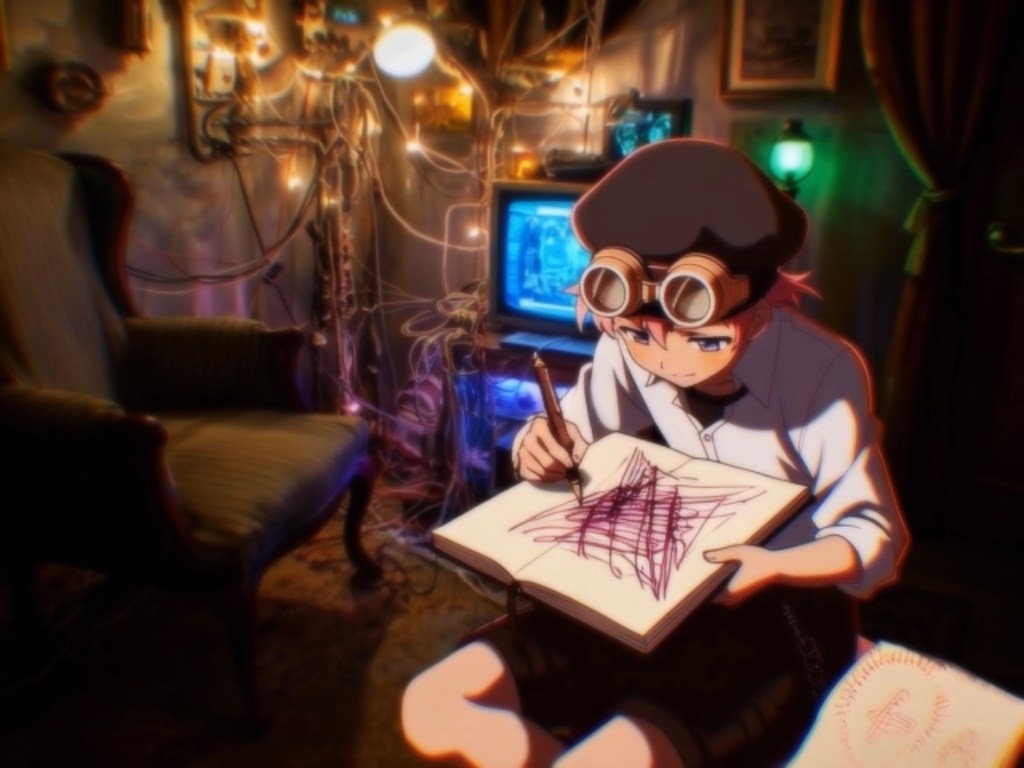
Lucky for him, it was a path he could walk back from. He was free. You could almost see it in his shaking hands from a worn dopamine system and the way his designs reflected on his days as an engineer. His hard work culminated in a freedom, a hungering void that invited creativity. A hole that allowed a community to pull him in and transform his mind.
The community was diverse, many not nearly as free as him. The especially unfree existed at the edge of collapse, a house of cards sustained by constant effort, endless cheap coffee, and the fear of abandonment by a society that had recently learned how to get by without them. For them, it wasn’t about the luxury of love or acceptance, but genuine survival. The stakes were so much higher. And so too were their motivated actions and ambitions.
The unfree side of the community had their own knack for engineering, but of minds rather than circuitry. They’d created a web of lies that acted as the local law. To have love, one must obey the laws or be cast to the depths of the abyss. They’d realized that the machines created by the engineering community had built the artist’s obsolescence, at least in regards to trading artwork within the domain of the advertisers and the broader consumer cultural programmers.

That link to consumer propaganda was no coincidence. The artists survival and willingness to tap into the cultural matrix to convince buyers that they needed some product had granted a great wisdom that was eventually “productive” as they descended into the AI art culture war. They were trained for this from the very beginning.

The local community laws were guided by dystopian prophecies. The story goes that they would soon be surpassed by the emerging Artificial Art God. And it was true, for the most part. That made it influential. The local laws? Fight against the machine that threatened to obsolete commercial artists. Disobey this and you’d find yourself not only ostracized, but on an enemy list.

The prophecy was essentially true. That web of lies previously mentioned was not in the details of their impending demise. It was in their strategic persuasion. Their survival had long depended on a set of skills like scoping out people’s incentives, their emotional responses, their need for acceptance and love, and of course their weak points. Such was the language of the domain of the public manipulators, the advertisers, and the propagandists, all of which were primary sources of survival for the artists.

Corruption is generally unjustified, but when survival is the currency for which it operates, the picture seems to change. Life and death are at the epicenter of what morally matters. All else falls shy. How could we judge them? It makes one wonder if the need for justification leads the evolution of the artist that lives at the edge of survival.

The obsolete artist started by begging for their survival, telling their story to all who were invested in their survival. When that began to fail, the propaganda skills emerged. “AI consumes too much water,” they said. They knew water was universally important, a moralized symbol for life itself. But in reality, a burger costed far more water than the AI. It’s clear they were lying because they wouldn’t advocate for water-saving generally, they just knew it was a persuasive moral utility. Their justification remained because their survivalism ensued. The toolkit of the perceptual mindjacker came out to play.
Overtime, a web of beliefs and arguments spread through the internet. A rainbow plethora of arguments against the machine sprouted to cover all the bases and trap as many people’s interests as possible. A whole machination, a community, a movement. If the weight grew large enough, the scale would tip in their favor… or so they hoped. The Artificial Art God was still barely born, so the war had just begun. And it was still cold.
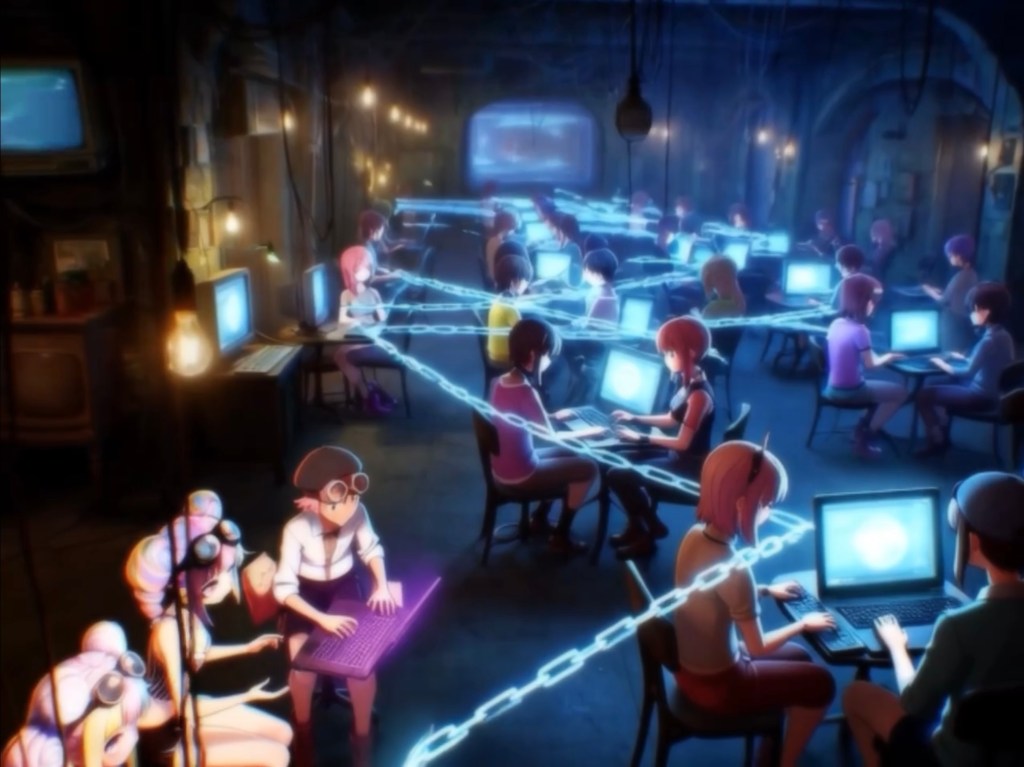
In order for the engineer to remain peaceful, he must adhere to the narratives, whether true or not. But the stakes were not so high, because his survival was now granted for life, at least what was left of it. The community granted him new life. They colonized his void. His retirement shielded him from the mechanisms of spreading delusion on some level, but the void still chewed at him, and so he played the social game. He argued on behalf of the community of surviving artists. Though, I could still get through to him because of his rare freedom.

Money drives this delusional brainwashing. It motivates our reasoning towards wrong beliefs. The scenario above is just a microscopic slice of the entirety of our money-engineered world. Money calculates our desires for survival, for status, for love, for everything that we could desire. But its abstraction scraps the details. It allows for us to make decisions by focusing on the empty currency rather than analyze the consequences on people’s desired world. It can’t track our lives in full clarity, but imagine if it could.
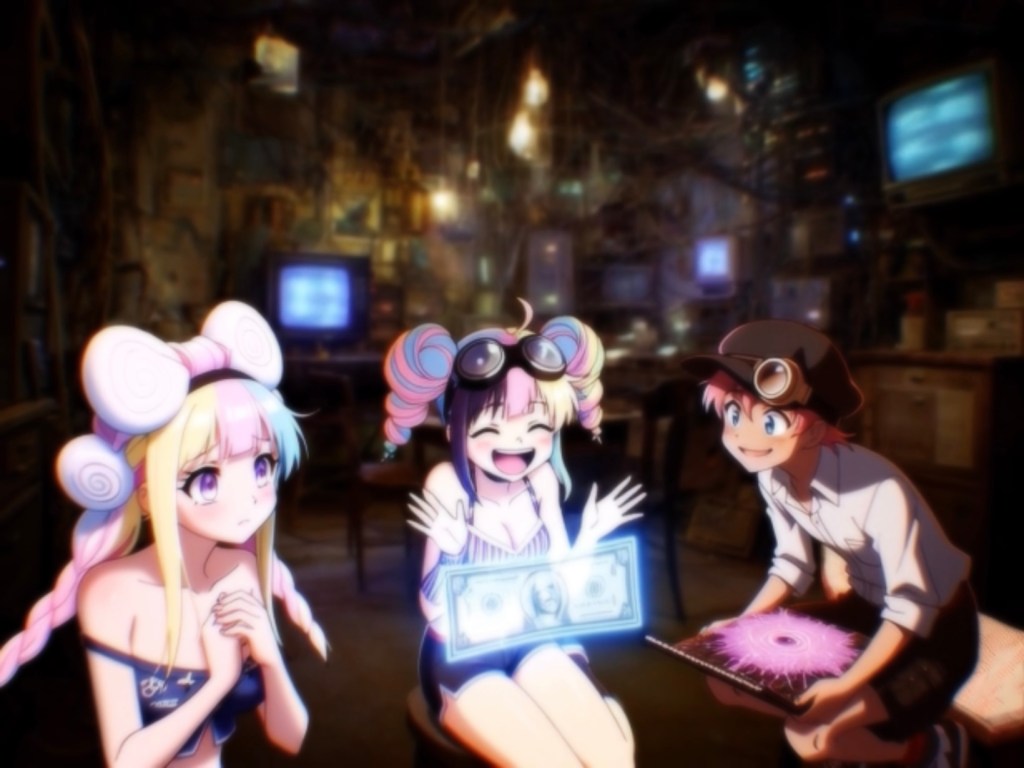
Look at the oil companies. They invest in brainwashing the uneducated to become their foot soldiers, and then threaten the educated through loss of their survival either through firing, erased resource access, or even in some cases actual ruin. The preservation of their livelihood depends on this. If they don’t, the house of cards crumbles. Science is compromised, but so are the colloquial narratives, even more so.
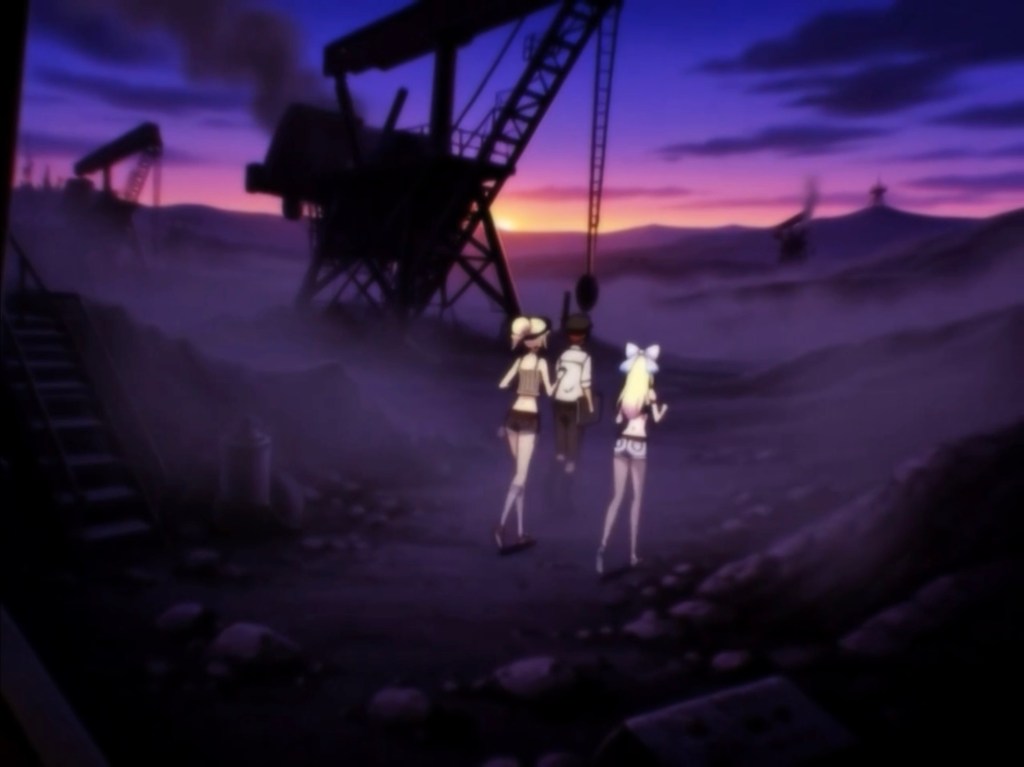
Reality is gone.
Society is a dream machine built upon people’s desires and fears. Curiosity has us chasing truth because actual reality will pay off far more in the long term.
Perception is compromised and we have built a machine that deviates from the consequences of reality.
Thank you to the 22 patrons who support these projects! Whether you know it or not, you’ve genuinely inspired me and helped get me through some really tough times.

 qwerky science
Reminds me of the concept of simulacrum, mentioned in the paper I showed you briefly “Baudrillard, hyperreality, and the ‘problematic’ of (mis/dis)information in social media” https://www.tandfonline.com/doi/pdf/10.1080/00933104.2024.2439302
“When simulations become so advanced or detached from reality that they no longer represent anything real, they become simulacra. It is easy, perhaps, to assume that a synonym for “simulacrum” is a “copy,” but more specifically, a simulacrum is a copy that is missing some (or all) of the essence of its referent. Simulacra not only lack the integrity of original referents but also can replace reality itself.”
LikeLiked by 1 person
Just realized I had a typo. I copied this comment from a link I sent to someone else. I haven’t shown you this article before but yes, it does remind me strikingly of your post.
LikeLike